Marketing automation for ecommerce: workflows, data and measurement
Welcome, post-purchase, abandoned basket and reactivation workflows depend on reliable data and the buying cycle. Here is how to prioritise them, choose a platform and measure their contribution.
Redazione Wasabi Marketing Studio ·
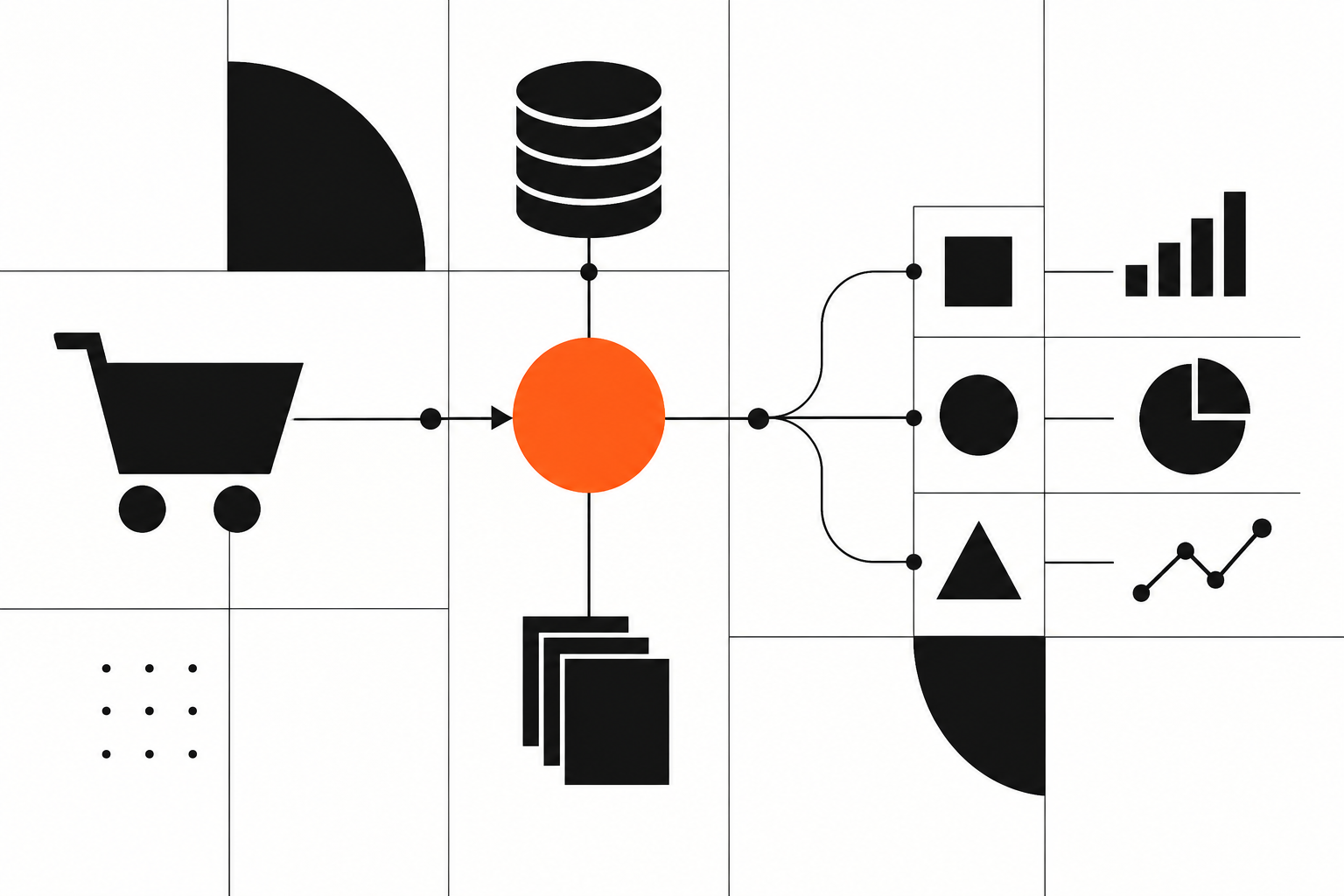
Marketing automation for ecommerce makes communication timely and consistent throughout the buying journey. It does not replace a clear commercial proposition, an understandable catalogue or a working checkout. If those foundations are weak, automation can simply distribute the same problems faster.
The useful question is not ‘how many emails can we send?’ but ‘which step can we improve, with what data, and how will we check the result?’ That determines your workflows, platform and operational responsibilities. Start with a small, testable system, not a sprawling diagram.
Marketing automation: which workflows should come first?
There is no universal sequence. Welcome emails need a reliable subscription process. Post-purchase communication depends on accurate order data. Abandoned basket reminders require identification, a lawful basis for contact and timely purchase updates.
Reactivation generally comes later: without sufficient history, it is difficult to distinguish inactivity from an infrequent buying pattern.
| Workflow | When to prioritise it | Essential prerequisite | Mistake to avoid |
|---|---|---|---|
| Welcome | Regular subscriptions, but no introductory journey | Recorded subscription source and consent | Repeating an introductory discount to existing buyers |
| Post-purchase | Product use and support shape the relationship | Current order, delivery and returns data | Promoting another purchase while the first has a problem |
| Abandoned basket | Identifiable abandoned baskets offer a relevant opportunity | Reliable events and checks on lawful contact | Sending reminders after purchase |
| Reactivation | Purchase history reveals a meaningful buying cycle | Last purchase and a plausible reorder interval | Treating naturally infrequent buyers as inactive |
Before adding a workflow, assign an owner, define its objective and confirm how it stops. Without exit rules, an automation keeps running after its purpose has disappeared.
Designing welcome, post-purchase, basket and reactivation workflows
Give each workflow a short specification: entry event, eligible recipients, exclusions, content, timing, exit condition and evaluation metric. Decide the number of messages afterwards.
Welcome: deliver the subscription promise
The first message should provide what you promised: information, access to content or an offer, where applicable. Later messages can explain product differences, selection criteria, delivery and returns.
Separate people who have never purchased from those subscribing after an order. Stop first-purchase prompts once someone buys. A discount is not a requirement: it can reduce margin without resolving a genuine hesitation.
Post-purchase: service before promotion
Separate messages needed to manage an order from promotional communication. An order confirmation does not automatically authorise a sales sequence.
Product guidance should arrive when it is useful. If instructions assume the parcel has arrived, use delivery data where available rather than a fixed delay after ordering. Add exclusions for returns, cancellations and open support issues.
In a hypothetical example, a coffee machine retailer could send maintenance instructions after delivery, then suggest relevant consumables later, provided the contact is lawful.
Abandoned basket: support an intention, not a pursuit
A reminder can show selected products and clarify delivery, availability or payment. It should not manufacture urgency or automatically offer an incentive.
Check that the basket remains valid, products are available and no purchase has occurred. Set an expiry point beyond which a reminder is no longer relevant. Entering an email address at checkout should not, by itself, be treated as general marketing permission.
If abandonment stems from errors or unclear charges, prioritise conversion rate optimisation, not more reminders.
Reactivation: follow the buying cycle
Define inactivity using the purchased category and historical behaviour. A lack of email opens alone does not establish disinterest.
In a hypothetical example, a furniture buyer might not need another product for a long time, while someone buying consumables follows a different cycle. A relevant message could invite preference updates or introduce an appropriate new product. If interest does not emerge, reduce or stop sending.
Data and segments: collect what changes a decision
Effective email marketing for ecommerce does not require collecting every available data point. It requires data reliable enough to change a message or prevent it being sent.
The foundation includes a contact identifier, language, subscription source, permission status, orders, purchased categories, returns and usable engagement signals. Every field needs an identifiable source and update rules.
Google Analytics documentation on recommended events provides references such as add_to_cart, begin_checkout, purchase and refund. Consistent naming is not enough: check that events reach the automation platform correctly and without duplication.
Initial segments can remain simple:
- Subscribers who have not purchased.
- First-time and returning buyers.
- People interested in an identifiable category.
- Contacts approaching a plausible reorder point.
- Contacts excluded because of withdrawal, complaints, delivery failures or order issues.
Across European markets, language and location are not interchangeable. An English-speaking shopper may face different currencies, delivery conditions and returns arrangements depending on their market. Profiles should support accurate communication without relying on assumptions about information you do not hold.
Consent and list quality are operational requirements
Where applicable, the General Data Protection Regulation requires an appropriate lawful basis, transparency, data minimisation and respect for individuals’ rights. It also provides a right to object to direct marketing; where processing relies on consent, that consent must be withdrawable.
The GDPR does not cover every rule governing promotional messages. Check the applicable electronic marketing requirements in each market rather than assuming one European setup works everywhere. Any exception to consent needs assessment within its specific limits, not treatment as blanket permission.
Operationally, keep evidence of permissions: their source, collection time, privacy information and wording presented. Email confirmation of a subscription can help verify control of an address and reduce incorrect sign-ups, but it cannot repair inadequate privacy information.
Pre-launch checklist
- Service messages are separate from promotional messages.
- Consent, objections and withdrawals synchronise across systems.
- Unsubscribing is accessible and has been tested in practice.
- Invalid addresses and spam complaints trigger appropriate exclusions.
- Imported lists have a documented source and lawful use.
- Retention and inactive-contact review criteria are defined.
- The sending domain is authenticated and monitored.
Google’s email sender guidelines and Yahoo’s sender best practices describe authentication, unsubscribe and reputation requirements and recommendations. Check which apply to your sending activity, including SPF, DKIM and DMARC. List quality also affects your ability to reach the inbox.
Choose the platform around your processes
The right platform handles your workflows without making operations fragile. A long feature list matters less than the ability to update a purchase, block a message or explain why someone entered a sequence.
Before choosing, request a demonstration using hypothetical scenarios: a cancelled order, withdrawn consent, a duplicate profile, an unavailable product and a contact eligible for several workflows. Check synchronisation delays, event logs, error handling and data exports.
Also assess:
- Integration with the shop, support and order management systems.
- Segmentation by language, market and category.
- Shared frequency limits across campaigns and automations.
- Roles, permissions and testing capabilities.
- Data processing terms and any international transfers.
- Costs for contacts, sends, integrations and maintenance.
In our email marketing and automation work, discussions with partners start with these constraints. Choosing the tool first risks forcing your processes around its limitations.
Measure contribution without claiming every sale
Revenue attributed by a platform is not the same as revenue generated by automation. Someone may receive an email and purchase anyway, or also interact with advertising, organic search and other channels. Their attribution claims can overlap.
Read results at distinct levels. Technical performance covers delivery, errors and correct workflow operation. Behavioural performance includes clicks and relevant actions. Commercial performance covers orders, revenue net of returns, discounts, margin and operating costs. Opens are an imperfect signal, affected by privacy protection mechanisms as well as recipient behaviour.
To estimate incremental contribution, where volumes and conditions allow, compare recipients with a randomly assigned control group excluded from the specific promotional automation. Keep necessary service communication unchanged and observe both groups over a period appropriate to the buying cycle.
Define the primary metric, observation window and handling of returns and cancellations before testing. If the sample is small, state the uncertainty: an observed difference does not automatically demonstrate a stable effect. Before-and-after comparisons can also reflect seasonality, promotions and traffic changes rather than the workflow itself.
Finally, monitor side effects: unsubscribes, complaints, overall contact frequency and dependence on incentives. A workflow that claims sales while weakening margin and the relationship is not necessarily a good investment. Start with one testable automation, correct it and expand only when the data and operational processes can support more.
Sources
- EUR-Lex — Regulation (EU) 2016/679: General Data Protection Regulation
- Google — Email sender guidelines
- Yahoo — Sender best practices
- Google Analytics — Recommended events
Need to identify a manageable first workflow for your ecommerce business? Talk to us. We can start with your available data, operational constraints and an agreed approach to measurement.